7 ways IPv6 makes life easier
Fewer "I'm not a robot" checks, smoother video calls and gaming, easier access to devices at home, and cheaper servers. The everyday benefits of IPv6, in plain English.
Mekanode ekibi
· 3 dk okuma
IPv6 can sound like a technical subject. But it's the fix for many small annoyances we all run into online. We've already explained what IPv6 is with an apartment-building analogy; now let's look at how the new address system makes everyday life easier.
1. Every device gets its own address
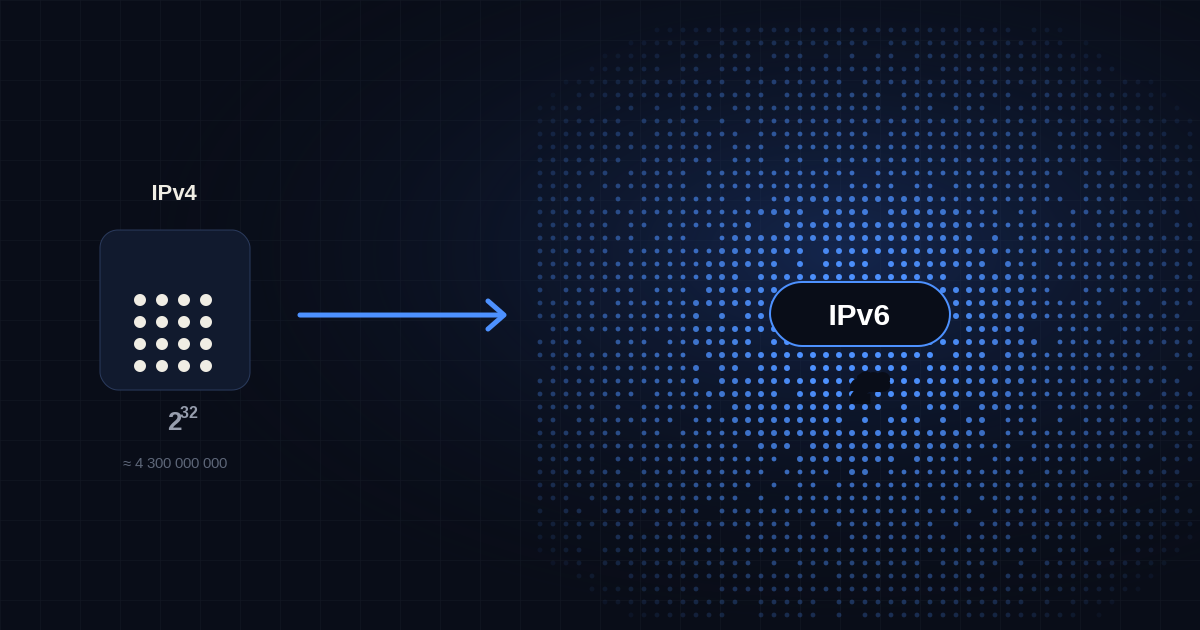
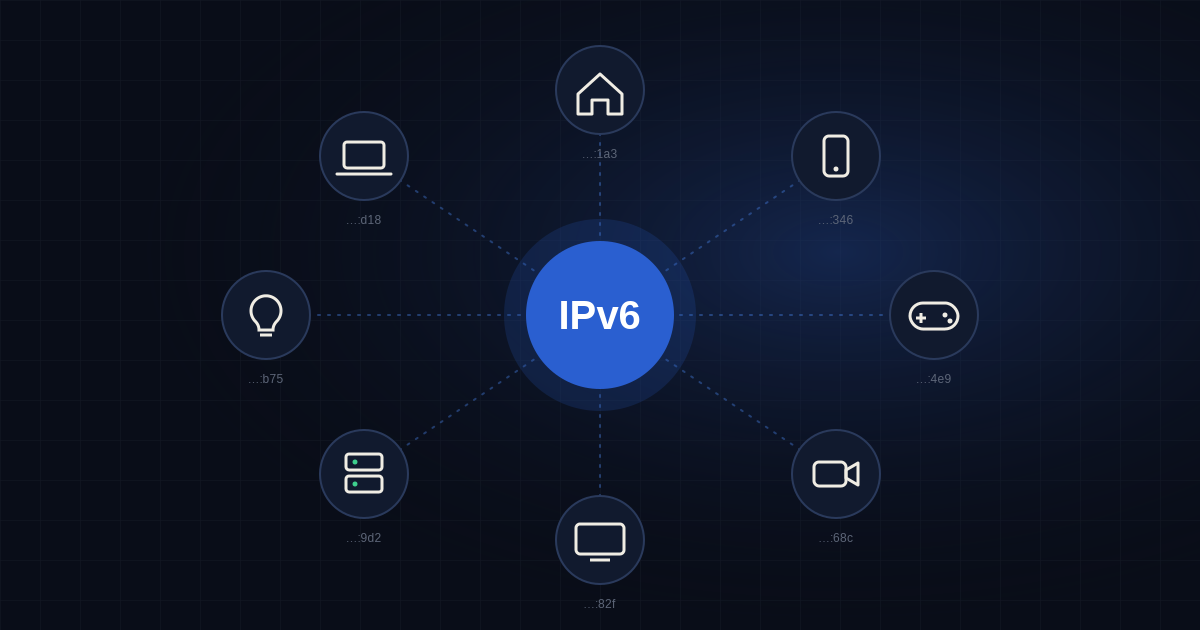
With IPv4, every device in your home shares one address, and your router hands out the traffic like a doorman. With IPv6 there are so many addresses that your phone, laptop and TV each get one of their own.
That's a return to how the internet was originally designed: devices can reach each other directly. Without a translator in the middle, things get faster and there's less that can go wrong.
2. Fewer "I'm not a robot" checks
Many providers now share a single IPv4 address between hundreds of customers. If one of them misbehaves, websites treat the whole address as suspicious, and you end up picking out traffic lights and buses again and again.
With IPv6, the address is yours. You don't pay for what someone else did.
3. Smoother video calls and online gaming
Video calls and games like it when two devices can connect directly. Shared addresses and doorman routers make that harder; that's where the "NAT type" problems gamers know so well come from.
When every device has its own address, those connections are much easier to set up. That means less lag and fewer failed connections.
4. Reaching your home from outside gets easier
Watching your home camera while you're on holiday, getting to the home server that holds your photos, running your own small game server... With IPv4 these usually need complicated "port forwarding" settings on the router, and if your provider shares your address, they may not be possible at all.
With IPv6, your device already has its own address. All you need to do is allow it through your router's firewall.
Having your own address doesn't mean being open to everyone. Most routers block incoming IPv6 connections by default. Only allow what you really want to open.
5. Your privacy is taken care of
"If every device has a fixed address, can I be tracked?" Good question. That's why Windows, macOS, iPhone and Android use temporary IPv6 addresses by default: the address you browse with changes regularly on its own. So IPv6 is no worse for privacy than IPv4 is today.
6. Cheaper servers, websites for everyone
A single IPv4 address now trades for tens of dollars, and that cost ends up in server prices. IPv6 addresses are plentiful and cheap.
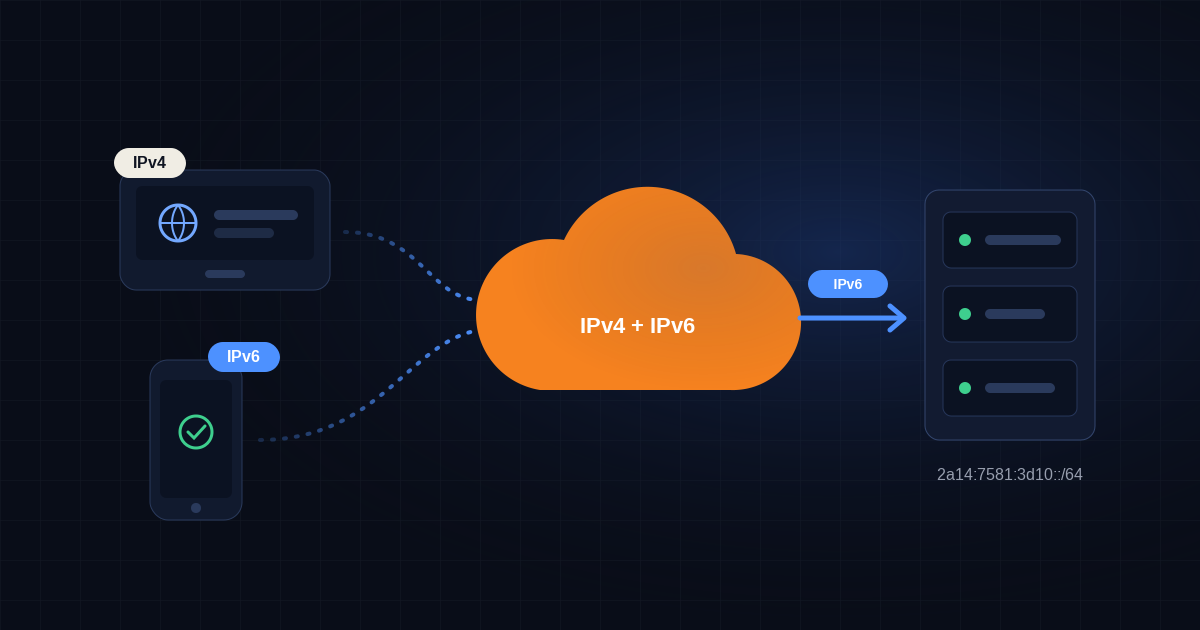
That's why Mekanode's NAT VPS plans are so affordable: the IPv4 address is shared, but every server has its own IPv6 /64 from our own network (AS206115), more than 18 quintillion addresses. With a little help from Cloudflare you can even run public websites on them. We've written a step-by-step guide.
7. The future is already here
IPv6 isn't tomorrow's technology, it's today's:
| Where | Today |
|---|---|
| Visitors to Google | Almost half use IPv6 |
| Mobile phones | Many networks give phones IPv6 |
| Big services | YouTube, Netflix, Facebook, Instagram and WhatsApp work over IPv6 |
| New devices | Almost every phone, computer and router supports IPv6 |
The share of IPv6 users grows every year, while IPv4 is slowly becoming a fallback kept around for talking to older systems.
What should you do at home?
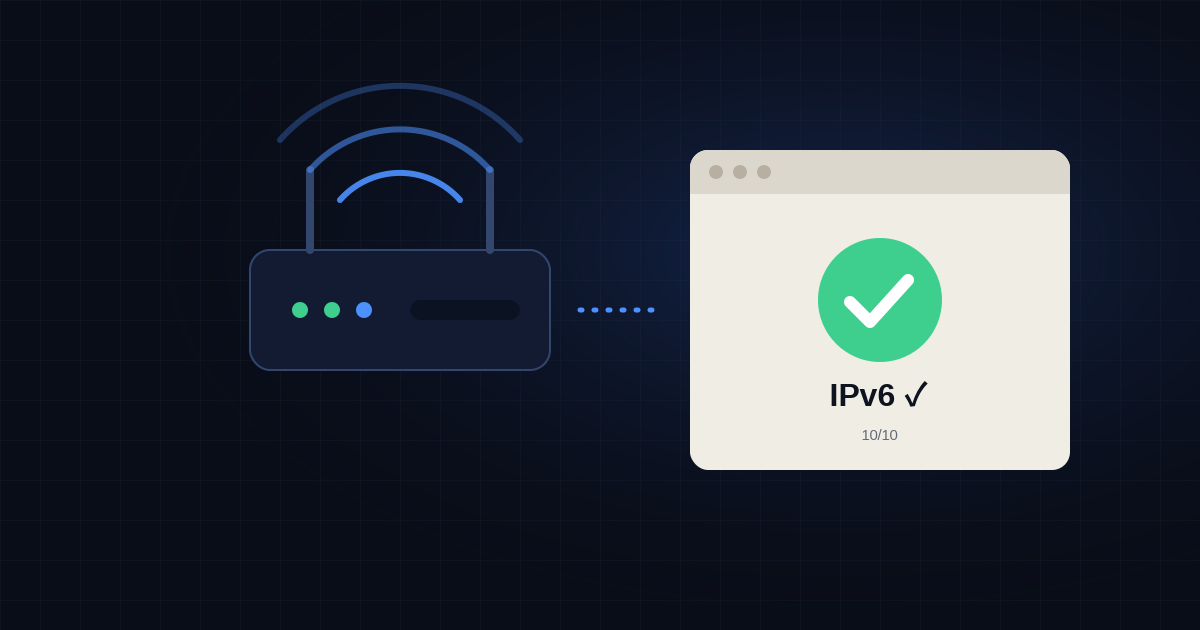
Usually nothing. But if your provider offers IPv6 and it's switched off on your router, turning it on takes a few clicks. Start by checking where you stand: Do you have IPv6 at home? Test it in one minute.
Her sunucuda gerçek IPv6 /64, NAT IPv4 ve tam root erişimi. Aylık £2.49'dan başlayan fiyatlarla, yaklaşık bir dakikada hazır.